-
-
3 Middle Road Hastings Kolkata – 700022, West Bengal, India
Consequences

Consequences
Acid attacks have a catastrophic effect on human flesh and vital organs. In most of
these
attacks, hydrochloric and sulphuric acid are used. These corrosive substances cause the
skin
tissue to melt. The bones of the survivors become exposed and, sometimes, the acid
dissolves
the bones too. Furthermore, if acid enters the eyes of the survivor during an attack, as
is
common in acid attack cases, it damages these vital organs permanently.
Many acid attack survivors have lost one or both eyes. As a result of disfigurement
and disability, the survivors are permanently debilitated and are forced to give up
their public lives, work and education. In this regard, compensation to cover vital
surgeries for survivors who can no longer support themselves
Acid eats through two layers of the skin—the fat and muscle underneath – and
sometimes not only eats through to the bone but may even dissolve the bone. The
deepness of injury depends on the strength of the acid and the duration of
contact
with the skin. Burning continues until the acid is thoroughly washed off with
water.
Thrown on a person’s face, acid rapidly eats into the eyes, ears, nose and
mouth.
The eyelids and lips may burn off completely.
The nose may melt, closing the nostrils, and the ears shrivel up.
Acid attacks, like other forms of violence against women, are social phenomena
deeply embedded in a gender order that has historically encouraged male
domination
over women and justified the use of violence to keep women in their places.
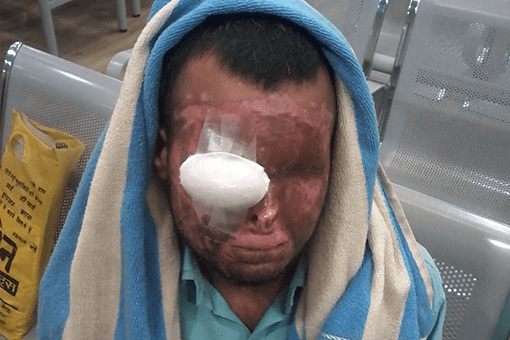
Trauma
Survivors of attacks not only undergo severe physical pain and trauma but also mental
trauma that changes the way they feel and think. Psychological trauma is caused by both
what the terror survivors suffer during the attack, as they feel their skin burning
away, and what they suffer after the attack with respect to the disfigurement or
disabilities they have to live with for the rest of their lives.
Survivors suffer psychological symptoms such as depression, insomnia, nightmares,
paranoia and/or fear of facing the outside world, headaches, weakness and tiredness,
difficulty in concentrating and remembering things, etc. They feel perpetually
depressed, ashamed, worried and lonely.
Usually, acid burn survivors suffer severe psychological symptoms for years, if not forever, because they are constantly reminded of the violent act by their physical scars. The feeling of lack of hope and worth may never leave them.
How to deal with Trauma?
ASWWF has developed a Trauma Informed Care Kit (TICK) details of which is
available from our sourcebook.
The idea is to address issues of prevention, medical treatment, psycho-social
care and rehabilitation for women afflicted by acid and burns assault through a
new transformative and healing approach, untried in this area before. The
trauma-informed care approach is normally extended to people who are accident
survivors. This unique, restorative approach has also been successfully used
with people who suffer from mental imbalances.
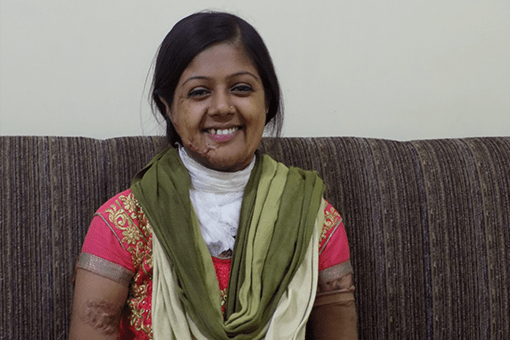
Stigma
Acid burn survivors face a lifetime of discrimination from society and they often become
lonely. They are embarrassed as they think people may stare or laugh at them, and may
hesitate to leave their homes fearing adverse reactions from the outside world.
Survivors who have suffered serious disabilities because of an attack, like blindness,
will not find jobs and earn a living. Discrimination from other people, or disabilities
such as blindness, makes it very difficult for survivors to fend for themselves and they
become dependent on others for food and money.
When the burns from an acid attack heal, they form thick scars which pull the skin very tight and can cause disfigurement. For instance, the eyelids may no longer close, the mouth may no longer open, and the chin becomes welded to the chest.
Disfigurement
Acid can quickly destroy the eyes, blinding the survivor. Skin and bone on the skull, forehead, cheeks and chin may dissolve. When the acid splashes or drips over the neck, chest, back, arms or legs, it burns every inch of the skin it falls on. The biggest, most immediate danger for survivors is breathing failure. Inhalation of acid vapors can create breathing problems in two ways:
- (a) By causing a poisonous reaction in the lungs,
- (b) By making the neck swell up, which constricts the airway and asphyxiates the survivor.
When the burns from an acid attack heal, they form thick scars which pull the skin
very tight and can cause disfigurement. For instance, the eyelids may no longer
close, the mouth may no longer open, and the chin becomes welded to the chest.
Following are details on the physical consequences :
Skull
May be partly destroyed or deformed. Hair is often lost.
Forehead
Skin may shrink, as though stretched tightly, and be scarred.
Ears
May be Shrivelled up and deformed. Deafness may occur immediately or later. Cartilage in the ear is usually partly or totally destroyed, exposing the survivor to future infection and hearing loss.
Eyes
Direct acid contact or acid vapors can damage the eyes, causing blindness. Even if the eyes survive the acid attack, they remain vulnerable to other threats which can cause blindness during the survivor’s recovery. Eyelids may be burned off, or may be deformed by scarring, leaving the eyes to dry up and go blind. This is very difficult to prevent.
Nose
May become Shrunken and deformed. Nostrils may close completely because the cartilage is destroyed.
Cheeks
May be Scarred and deformed.
Mouth
Shrunken and narrowed, may lose its shape. Lips may be partly or totally destroyed. Lips may be permanently flared, exposing the teeth. Movement of the lips, mouth and face may be impaired. Eating can be difficult.
Chin
Gets Scarred and deformed. The scars may run downward, welding the chin to the neck or chest.
Neck
It is often badly damaged. It may have a thick cord of scarred flesh running down from the chin to the upper chest, or a wide, heavily scarred area on one side of the neck. The survivor may be unable to extend the neck, or the head may constantly lean to one side.
Chest
Often gets badly scarred. The chest may have narrow lines of scars or wide patches of scars from acid splashes or drips. In girls and young women, the development of breasts ceases, or their breasts may be destroyed completely.
Shoulder
May be badly scarred, especially around the underarm, which may limit the survivor’s arm movement. In some cases, one or both of the survivor’s upper arms may be stuck like glue to the sides of their body.
Survivor’s journey
The foremost need is to provide free or affordable medical treatment. There are virtually no government or charity hospitals with intensive care facilities for treating serious burns cases (not to mention acid) except a few in large cities. The number of burn cases is staggering and few can afford treatment at a private hospital.
Critical Medical Stages
- Initial assessment/ examination by a doctor
- Getting admitted to burn Intensive Care Unit or burn ward– Initial medical treatment (stabilization, dressing)
- Treatment during critical period in burn ward – Skin grafting, trauma control, physiotherapy, high protein diet
- Healing in sterile environment – Physiotherapy, dressing, trauma control, high protein diet
Secondary Medical Stages
- Physiotherapy (to maximize healing)
- Reconstructive surgery
Non-Medical Rehabilitative Aspects
- Psychological counselling and support
- Social rehabilitation
- Vocational training and therapy
- Legal Support
Special Needs of Burn Patients
Acid burns are extremely serious; they melt human flesh and bone causing severe pain.
An acid survivor may spend months recovering in hospital following painful surgeries
and regular monitoring; full recovery could take years. Often permanent discomfort
is felt including tearing of eyes and harsh effects of the sun.
Firstly, sterile environment is essential due to weakened immune responses of the
survivor inhibiting human cell regeneration.
Secondly, physiotherapy is
essential – to prevent or minimise burn contractures. Without physiotherapy a
patient’s chin can fuse with the chest, hands can twist into a fist, the forearm
will bend into the upper arm and skin, muscles and ligaments in joints can contract.
Thirdly, Suitable diet is required with high amounts of energy and protein
for the body to synthesis new cells (skin, blood vessels and muscle tissue). Failure
to provide burn patients with sufficient nutrition decreases host resistance to
infection and causes cellular dysfunction.
It should be remembered that
status quo ante in physical appearance of survivors is seldom achievable.
